

Starting off with Wealth Management Advisory Firm vs. Robo-Advisors: Which is Best for You?, this opening paragraph aims to grab the reader's attention and provide a brief overview of the comparison between traditional wealth management firms and automated robo-advisors.
Wealth Management Advisory Firm vs. Robo-Advisors
When it comes to managing your finances and investments, you may consider seeking help from a wealth management advisory firm or using a robo-advisor. Both options have their own set of benefits and drawbacks, so it's important to understand how they operate and what they can offer you.
Role of a Wealth Management Advisory Firm
A wealth management advisory firm is a group of financial experts who provide personalized advice and guidance on investment decisions, retirement planning, tax strategies, and overall wealth management. They work closely with clients to understand their financial goals and create customized plans to help them achieve those goals.
What are Robo-Advisors and How They Operate
Robo-advisors are automated online platforms that use algorithms to create and manage investment portfolios for clients. They typically offer low fees and require minimal human intervention. Clients input their financial information, risk tolerance, and investment goals, and the robo-advisor handles the rest, rebalancing portfolios and making investment decisions based on the predetermined criteria.
Benefits and Drawbacks of Wealth Management Advisory Firms vs. Robo-Advisors
- Wealth Management Advisory Firm:
- Personalized advice tailored to individual needs and goals.
- Access to a team of financial experts with years of experience.
- Ability to handle complex financial situations and provide comprehensive planning.
- Relationship-based approach with ongoing support and guidance.
- Drawbacks:
- Higher fees compared to robo-advisors.
- May require a minimum investment amount to get started.
- Reliance on human advisors can lead to potential biases or errors in decision-making.
- Robo-Advisors:
- Low fees and minimum investment requirements make them accessible to a wider range of investors.
- Automated portfolio management with rebalancing and tax-loss harvesting features.
- Transparent and data-driven investment decisions based on algorithms.
- 24/7 online access for monitoring and managing investments.
- Drawbacks:
- Lack of personalized advice and human interaction.
- May not handle complex financial situations as effectively as human advisors.
- Limited ability to adjust investment strategies based on non-financial factors.
Services Offered
 When it comes to managing your finances, understanding the services offered by wealth management advisory firms and robo-advisors is crucial in making an informed decision.
Wealth Management Advisory Firm Services
Wealth management advisory firms offer a range of personalized services tailored to meet the individual needs of their clients. These services typically include:
- Financial planning and goal setting
- Investment management
- Retirement planning
- Estate planning
- Tax planning
- Insurance planning
- Risk management
Robo-Advisor Services
On the other hand, robo-advisors provide automated, algorithm-driven financial planning services with minimal human intervention. The services offered by robo-advisors include:
- Portfolio management
- Automatic rebalancing of investments
- Tax-loss harvesting
- Financial goal tracking
- Low-cost investment options
Differences in Personalized Services
The main difference between wealth management advisory firms and robo-advisors lies in the level of personalized services provided. Wealth management advisory firms offer a high degree of customization and personalization, with financial advisors working closely with clients to understand their unique goals and financial situation. This personalized approach allows for tailored investment strategies and comprehensive financial planning.
On the other hand, robo-advisors rely on algorithms and automated processes to manage investments, which may lack the personal touch and customization that comes with working directly with a financial advisor. While robo-advisors can offer convenience and lower fees, they may not be able to provide the same level of personalized advice and guidance as wealth management advisory firms.
Human Interaction vs. Automation
In the realm of wealth management, the debate between human interaction and automation has been a longstanding one. Both wealth management advisory firms and robo-advisors offer distinct advantages and drawbacks when it comes to the level of personal touch they provide to clients.Importance of Human Interaction in Wealth Management Advisory Firms
Human interaction in wealth management advisory firms is crucial for building trust, understanding personalized financial goals, and providing tailored solutions to clients. Clients often value the ability to speak directly with a financial advisor, ask questions, and receive guidance based on their unique circumstances.- Advisors offer emotional support and empathy, which can be comforting during turbulent market conditions.
- They can provide in-depth financial planning strategies that take into account complex life situations and goals.
- Face-to-face meetings allow for a more comprehensive understanding of the client's risk tolerance and investment preferences.
Role of Automation in Services Provided by Robo-Advisors
Robo-advisors rely on algorithms and automation to manage client portfolios efficiently and cost-effectively. While lacking the human touch, they offer streamlined investment solutions that are based on predetermined risk profiles and investment objectives.- Automation allows for quick portfolio rebalancing and tax-loss harvesting without the need for direct human intervention.
- Robo-advisors can provide low-cost investment options, making wealth management more accessible to a broader range of clients.
- They offer 24/7 online access to financial information and investment performance, catering to clients who prefer digital interactions.
Impact of Human Touch and Automated Services on Client Relationships and Financial Planning
The balance between human touch and automation is essential in maintaining strong client relationships and effective financial planning strategies. While human advisors excel in emotional support and personalized guidance, robo-advisors offer efficiency and convenience in managing investments.- A hybrid approach, combining human expertise with technological advancements, can provide clients with the best of both worlds.
- Client relationships benefit from the trust and understanding built through human interactions, while automated services streamline investment processes.
- Financial planning becomes more comprehensive when human advisors and robo-advisors work together to leverage their respective strengths.
Customization and Personalization
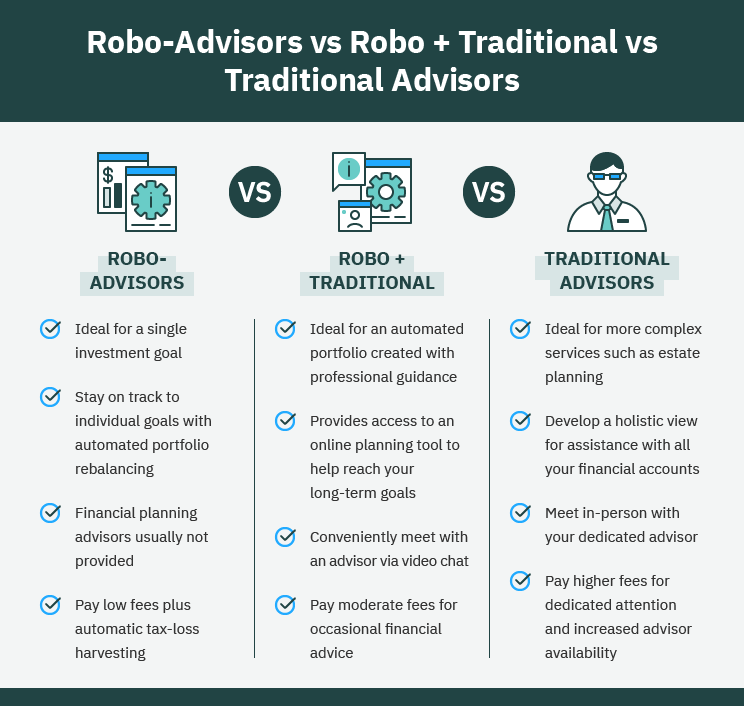 When it comes to managing your finances, having a personalized approach can make a significant difference in achieving your financial goals. Let's explore how wealth management advisory firms and robo-advisors stack up in terms of customization and personalization.
Wealth Management Advisory Firms
Wealth management advisory firms are known for their high level of customization and personalization. These firms typically assign a dedicated financial advisor to each client, who takes the time to understand their unique financial situation, goals, risk tolerance, and preferences. Based on this information, the advisor creates a tailored financial plan that aligns with the client's objectives. Clients can also expect ongoing communication and regular reviews to ensure that their plan remains on track and is adjusted as needed.Robo-Advisors
Robo-advisors, on the other hand, rely on algorithms and automation to manage clients' investments. While some robo-advisors offer questionnaires to assess risk tolerance and investment goals, the level of customization may be limited compared to wealth management advisory firms. The investment strategies generated by robo-advisors are typically based on algorithms and predetermined asset allocations, which may not take into account the intricacies of an individual's financial situation or goals.Comparison
In terms of personalized financial strategies, wealth management advisory firms have the upper hand. The human touch and personalized approach offered by these firms allow for a deeper understanding of each client's unique needs and goals. This enables advisors to create tailored financial plans that take into account specific circumstances and preferences. On the other hand, robo-advisors may offer convenience and lower fees, but they may not provide the same level of customization and personalization that clients can expect from wealth management advisory firms.Final Wrap-Up
Concluding our discussion on Wealth Management Advisory Firm vs. Robo-Advisors: Which is Best for You?, we have explored the key differences and factors to consider when choosing between the two.
Detailed FAQs
What personalized services can you expect from a wealth management advisory firm?
Wealth management advisory firms offer tailored investment strategies, retirement planning, estate planning, and wealth preservation services based on individual client needs.
How do robo-advisors differ in their approach to financial management compared to wealth management advisory firms?
Robo-advisors use algorithms and automation to provide low-cost investment solutions without the need for extensive human interaction, offering a more hands-off approach to financial planning.
What impact does human touch have on client relationships in wealth management advisory firms?
Human interaction in wealth management advisory firms fosters trust, personalized guidance, and a deeper understanding of client goals and preferences, enhancing the overall client experience.